Precision Surface Finishing: Scaling Detail Work with Detail Sander Paper
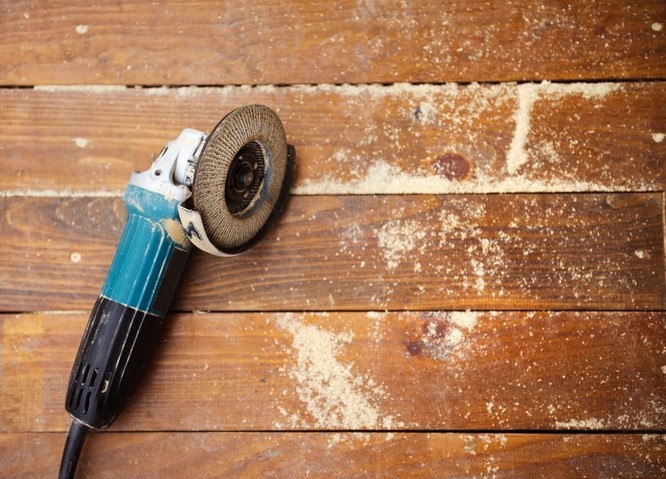
Source:https://www.sealantsandtoolsdirect.co.uk
You’ve just spent forty hours stripping the old, flaky varnish off a vintage mahogany vanity. The flat surfaces look like glass, but as you approach those intricate, hand-carved spindles and tight 90-degree corners, your heart sinks. You try folding a piece of standard sandpaper, but it tears within seconds, and your fingertips are starting to feel the burn of the friction. This is the “final mile” of restoration where most projects fail—not because of a lack of skill, but because of a lack of the right abrasive geometry.
In my decade of restoring everything from Victorian crown molding to custom cabinetry, I’ve learned that the difference between a “DIY look” and a professional finish is found in the tightest crevices. Mastering the use of Detail Sander Paper is your secret weapon for conquering those impossible spaces without losing your mind or your fingerprints.
The Geometry of Abrasives: Why Square Paper Fails
Standard sandpaper is designed for the open road—broad, flat plains of wood where a large orbital sander can roam free. But a piece of furniture is more like a dense city with narrow alleys and sharp turns. If you try to force a large tool into a small space, you end up “rounding over” sharp edges that were meant to stay crisp.
Detail Sander Paper, typically shaped like a teardrop or a triangle (often called “mouse” paper), is engineered for surgical strikes. The pointed tip allows you to reach the very back of a corner, while the hook-and-loop backing ensures the paper stays rigid under high-speed vibration. Without this specialized shape, you’re essentially trying to perform dental surgery with a snow shovel.
The Anatomy of the Grit
When we talk about detail work, we aren’t just talking about shape; we’re talking about grit progression.
-
Coarse (60-80 Grit): For removing stubborn old paint in corners.
-
Medium (120-150 Grit): The “bridge” grit that removes the scratches left by the coarse paper.
-
Fine (220+ Grit): This is where the magic happens, creating a surface so smooth the finish bonds perfectly.
Matching Detail Sander Paper to Your Material
Throughout my career, I’ve seen beginners ruin expensive projects by using the wrong abrasive coating. It’s not just about the number on the back of the paper; it’s about the mineral on the front.
Aluminum Oxide vs. Silicon Carbide
Most Detail Sander Paper you’ll find is Aluminum Oxide. It’s the “all-rounder”—tough, friable (meaning it breaks down to reveal new sharp edges), and perfect for hardwoods like oak or maple.
However, if you are working on finishing a metal accent or a very resinous softwood, you might seek out Silicon Carbide. In my experience, Silicon Carbide is like a razor blade while Aluminum Oxide is like a chisel. Use the “chisel” for the heavy lifting and the “razor” for the delicate final touches.
The “Anti-Clogging” Secret
One insight only pros usually talk about is Stearate coating. If you’re sanding a surface that previously had wax or a soft oil finish, your paper will “load up” (clog) in seconds. High-quality detail paper often features an open-coat structure with a soapy zinc stearate layer that sheds dust, extending the life of your paper by up to 300%.
Analogy: The Toothbrush vs. The Scrub Brush
Think of a large belt sander as a heavy-duty scrub brush used to clean a garage floor. It’s powerful and fast, but you wouldn’t use it to clean between your teeth. Detail Sander Paper is your dental kit. It’s designed to get into the “interproximal” spaces—the gaps and joints—where the real rot (or in our case, old finish) hides. If you skip the toothbrushing phase of your project, the final result will never look healthy, no matter how much “polish” you apply.
Pro Techniques for Scaling Detail Work
If you want to move from a beginner to an intermediate level, you need to stop “scrubbing” and start “gliding.” Here is how I approach detail finishing on high-stakes projects:
-
The “No-Pressure” Rule: Let the tool do the work. If you press down hard on a detail sander, you generate heat. Heat melts the resin in the wood or the finish on the paper, leading to “pills” of gunk that scratch your work.
-
Tip Rotation: The tip of your Detail Sander Paper will always wear out first. Many modern detail sanders allow you to rotate the base or the paper itself. I usually get three “lives” out of one sheet by rotating it 120 degrees whenever the point gets dull.
-
Vibration Management: Detail sanders vibrate at high OPM (Orbits Per Minute). To avoid “numb hand” syndrome during long sessions, I recommend using a sheet with a thicker cloth backing, which absorbs some of the secondary vibration before it hits your palm.
Tips Pro: If you’re working on a particularly deep groove that even the detail sander can’t reach, take a used piece of Detail Sander Paper, fold it over a popsicle stick, and use it as a custom-shaped “sanding file.” The hook-and-loop backing provides just enough cushion to prevent the wood from gouging.
The “Burn-Through” Risk
Here is a warning I give every apprentice: Watch your edges. Because detail sanders are small, it is incredibly easy to accidentally tilt the tool. If you put the weight on the edge of the sanding pad, you will “burn through” the veneer or the wood’s natural profile in a heartbeat.
Always keep the pad perfectly flush with the surface. If you feel the tool start to “hop,” you’re likely holding it at an angle. Stop, reset, and keep it flat.
Scannable Finishing Checklist
To ensure your detail work scales correctly across a large project, follow this technical flow:
-
Vacuum Constantly: Dust trapped between the paper and the wood acts like a rogue abrasive, creating “swirl marks.”
-
Check for “Glazing”: If the paper looks shiny, it’s clogged. Throw it away. Using clogged paper just burns the wood.
-
Grit Skipping: Never skip more than one grit level. If you go from 80 straight to 220, you’ll leave deep 80-grit canyons that the 220 can’t reach, which will show up the moment you apply a stain.
-
Direction Matters: Even with an orbital detail sander, try to finish your final pass (the 220 grit) by moving the tool in the direction of the wood grain.
The Economics of Quality Paper
I often see beginners buying the “value packs” of 100 sheets for five dollars. It’s a trap. Cheap Detail Sander Paper usually has poor adhesive, meaning the grit flies off the paper before it even touches the wood.
Investing in high-quality, ceramic-blend or premium aluminum oxide paper might cost more upfront, but you’ll use two sheets instead of ten. In my shop, we measure cost per “square inch of finished surface,” and the premium stuff wins every single time.
Conclusion: Beauty is in the Details
At the end of the day, no one notices the flat top of a table if the corners are full of old paint and rough edges. Precision surface finishing is an act of patience, and Detail Sander Paper is the tool that makes that patience pay off. It allows you to scale your ambition—taking on complex, ornate pieces that others would shy away from.
Are you currently staring down a project with impossible corners? Don’t let the detail work intimidate you. Grab the right grit, keep your sander flat, and watch those tight spots transform from a frustration into a masterpiece.
What’s the most difficult corner you’ve ever had to sand? Drop a comment below or share your best DIY “hack” for reaching those tiny crevices—I’d love to hear how you tackle the tough stuff!